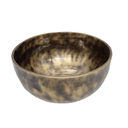
From a chattering rim to a steady hum: simple adjustments to your grip, speed, pressure and striker.

You strike your bowl, start circling the rim, and instead of a warm rising hum you hear a harsh, chattering rattle. Or the tone builds for a moment, then dies. Before changing the bowl, check how you support it and how the striker meets the rim.
Why does a singing bowl rattle?
A singing bowl can rattle when the striker repeatedly loses contact with the vibrating rim and bounces against it. Rimming relies on friction between the striker and metal to feed energy into the bowl’s vibration.
As the tone grows, it can become harder to maintain smooth contact. Too much speed, too little pressure or an uneven angle can turn a continuous hum into a clack-clack-clack. A buzz from underneath may instead be the bowl vibrating against its support.
Quick diagnosis: what you hear and how to fix it
Use the sound as your starting point. Change one thing at a time so you can hear what helps.
| What you hear | Likely cause | Try this |
|---|---|---|
| No sound builds | Fingers touch the wall, or contact is too light | Fix 1 · Fix 4 |
| Low buzz underneath | The base vibrates against a hard surface | Fix 2 |
| Metallic chatter as it gets louder | The striker moves too fast or loses contact | Fix 3 · Fix 4 |
| Tone swells, then dies | Pressure or contact changes during the circle | Fix 4 · Fix 5 |
| Striker slips off the rim | The contact angle or position needs adjusting | Fix 6 |
| Thin, scratchy tone | The striker surface or size does not suit the bowl | Fix 7 |
| Dull buzz even when struck | Support, loose objects or possible damage | Check the bowl |
7 fixes for a rattling singing bowl
1. Take your fingers off the bowl’s wall
The wall needs room to vibrate. If your thumb or fingertips curl around the sides, they absorb energy and shorten the ring.
The fix: Flatten your non-dominant hand like a waiter carrying a tray. Let a small, comfortable-to-hold bowl rest on your open palm, with your fingers extended away from its sides. If it feels heavy or unstable, use a cushion instead.
2. Move the bowl off hard surfaces
A metal bowl on bare wood, tile or glass may buzz against the surface or slide as you circle. The noise may come from the base rather than the rim.
The fix: Put the bowl on a firm, stable ring cushion that supports the base without touching the walls. A neatly folded towel can work for practice. Avoid deep, soft padding that lets the bowl wobble.

3. Slow down
Trying to make the tone louder by circling faster often makes the striker skip. A louder bowl may need a slower, more controlled circle.
The fix: Try cutting your circling speed in half while keeping contact steady. Think of stirring a heavy pot of thick soup: slow, smooth and unhurried. If the bowl is already chattering strongly, lift away and restart after it settles.
4. Adjust your pressure and keep it even
Skimming the rim too lightly can make the striker bounce. Pressing excessively can also make the bowl difficult to play. The aim is steady contact, not maximum force.
The fix: If the striker is skipping, add a little moderate inward pressure. Keep it consistent all the way around. If the tone feels choked or your hand strains, ease off slightly and start again.
5. Circle with your whole arm
Twisting only your wrist can change the contact point and pressure, especially on the side nearest your body. The tone may swell and fade once per circle.
The fix: Keep your wrist relaxed and let your elbow and shoulder guide the movement. Reposition the bowl so you can reach its full circumference comfortably.
6. Adjust the angle for broad, steady contact
A striker touching only with its tip or edge can slip more easily. The useful angle depends on the shape of the bowl and the striker.
The fix: Hold the striker like a pen and place its side against the outside wall near the rim. Start near upright, then tilt slightly if that gives smoother contact. You do not need to hold an exact 30–45° angle. Keep your fingers clear of the bowl.
7. Use the right striker
Not every mallet is made for the same playing technique. Match its size and surface to the bowl.
| Playing surface | Best starting use | For rimming |
|---|---|---|
| Bare wood | Bright strikes and small-bowl tones | Can work well, but may sound sharper or chatter on some bowls |
| Suede-wrapped wood | Warm strikes and steady rim contact | A useful starting choice, especially for medium and large bowls |
| Wool felt head | Soft, deep strikes | Mainly a striking tool; use a suitable wood or suede striker to learn rimming |
The fix: Try the suede end if bare wood keeps skipping. If you struggle to keep steady pressure on a large bowl, try a larger, comfortable-to-hold striker.

For bowl diameters and exact tool sizes, see our Singing Bowl Mallet & Striker Guide: Wood vs. Suede vs. Felt.
How to play a singing bowl: the 60-second “wake-up and rim” technique
Use this as a short practice sequence. Take longer if you need to; a clear, gentle tone matters more than speed.
- Seat the bowl. Rest it on a flat open palm or stable ring cushion. Keep the wall clear.
- Hold the striker like a pen. Find a comfortable grip that lets its playing surface reach the bowl without your fingers touching the metal.
- Give a warm-up strike. Tap the outside wall gently near the rim and let the striker rebound.
- Catch the vibration. While it is still ringing, place the side of the striker against the outer rim.
- Circle with your whole arm. Move slowly and keep moderate inward pressure consistent.
- Hold steady as the tone grows. Give it several rotations. If it chatters, slow down and adjust your contact.
- Finish cleanly. Lift the striker away and let the sound fade naturally.
When the bowl itself may be the problem
Technique solves many rattles, but support, dirt or damage can also affect the sound. Start with one gentle strike and listen before rimming.
- Check the support. Move the bowl to a stable cushion and make sure no jewellery, loose objects or fingers touch its wall.
- Check the rim. Wipe away oil and dust with a soft dry cloth. Keep oil, polish and moisture off the striker’s playing surface.
- Look for possible damage. A persistent dull buzz or unusually short ring can have several causes, including a crack. Inspect the rim in good light and ask the seller to assess it if you are concerned.
A clear struck tone is a useful sign, but it does not guarantee easy rimming with every striker. Bowl shape, wall thickness and tool choice also matter.
For routine cleaning, read How to Care for a Singing Bowl.
Frequently asked questions
Why does my singing bowl rattle only when it gets loud?
As the sound grows, the bowl vibrates more strongly and the striker can start to bounce. Slow your circle and add a little steady pressure. If the chatter continues, lift the striker away, let the sound settle and restart gently.
How long does it take to learn to play a singing bowl?
Some people find a steady tone in their first session; others need several short practice sessions. Focus on a slow circle, even contact and a suitable striker rather than trying to meet a time limit.
Does circling clockwise or counterclockwise change the sound?
You can play in either direction. Direction alone does not set the bowl’s pitch; changes you hear usually come from pressure, speed or contact. Use the direction that feels most comfortable.
Why does my new suede mallet feel slippery?
Check whether the suede is still covered in protective film and remove it before playing. New suede may also feel smooth at first. Keep it dry and brush it gently with a soft dry brush if needed; avoid oil or polish on the playing surface.
Do I need to put water in a singing bowl?
No. A singing bowl can be played dry. Water changes its response and may create ripple patterns, but it is not needed for a clear tone or for learning to rim.
Can I play a singing bowl by striking it only?
Yes. A gentle strike on the outside wall near the rim gives a ringing tone without rimming. Let the padded mallet rebound immediately, then listen as the sound fades. Continuous rimming is an optional second technique.
Choose your bowl and playing tools
Explore our handmade bowls and accessories, or send us your bowl’s diameter and a short video of the sound. We can help you choose a suitable striker.
Plain singing bowlsExplore simple finishes and choose a size for your practice.
Explore plain bowlsEngraved singing bowlsHandmade bowls with engraved designs.
Explore engraved bowlsNeed help with your technique?Tell us your bowl’s diameter and the striker you use.
Ask our workshopBy the Buddha Chime Workshop, Kathmandu, Nepal. Meet Buddha Chime or continue with our singing bowl meditation guide.
From a chattering rim to a steady hum: simple adjustments to your grip, speed, pressure and striker.
You strike your bowl, start circling the rim, and instead of a warm rising hum you hear a harsh, chattering rattle. Or the tone builds for a moment, then dies. Before changing the bowl, check how you support it and how the striker meets the rim.
Why does a singing bowl rattle?
A singing bowl can rattle when the striker repeatedly loses contact with the vibrating rim and bounces against it. Rimming relies on friction between the striker and metal to feed energy into the bowl’s vibration.
As the tone grows, it can become harder to maintain smooth contact. Too much speed, too little pressure or an uneven angle can turn a continuous hum into a clack-clack-clack. A buzz from underneath may instead be the bowl vibrating against its support.
Quick diagnosis: what you hear and how to fix it
Use the sound as your starting point. Change one thing at a time so you can hear what helps.
| What you hear | Likely cause | Try this |
|---|---|---|
| No sound builds | Fingers touch the wall, or contact is too light | Fix 1 · Fix 4 |
| Low buzz underneath | The base vibrates against a hard surface | Fix 2 |
| Metallic chatter as it gets louder | The striker moves too fast or loses contact | Fix 3 · Fix 4 |
| Tone swells, then dies | Pressure or contact changes during the circle | Fix 4 · Fix 5 |
| Striker slips off the rim | The contact angle or position needs adjusting | Fix 6 |
| Thin, scratchy tone | The striker surface or size does not suit the bowl | Fix 7 |
| Dull buzz even when struck | Support, loose objects or possible damage | Check the bowl |
7 fixes for a rattling singing bowl
1. Take your fingers off the bowl’s wall
The wall needs room to vibrate. If your thumb or fingertips curl around the sides, they absorb energy and shorten the ring.
The fix: Flatten your non-dominant hand like a waiter carrying a tray. Let a small, comfortable-to-hold bowl rest on your open palm, with your fingers extended away from its sides. If it feels heavy or unstable, use a cushion instead.
2. Move the bowl off hard surfaces
A metal bowl on bare wood, tile or glass may buzz against the surface or slide as you circle. The noise may come from the base rather than the rim.
The fix: Put the bowl on a firm, stable ring cushion that supports the base without touching the walls. A neatly folded towel can work for practice. Avoid deep, soft padding that lets the bowl wobble.
3. Slow down
Trying to make the tone louder by circling faster often makes the striker skip. A louder bowl may need a slower, more controlled circle.
The fix: Try cutting your circling speed in half while keeping contact steady. Think of stirring a heavy pot of thick soup: slow, smooth and unhurried. If the bowl is already chattering strongly, lift away and restart after it settles.
4. Adjust your pressure and keep it even
Skimming the rim too lightly can make the striker bounce. Pressing excessively can also make the bowl difficult to play. The aim is steady contact, not maximum force.
The fix: If the striker is skipping, add a little moderate inward pressure. Keep it consistent all the way around. If the tone feels choked or your hand strains, ease off slightly and start again.
5. Circle with your whole arm
Twisting only your wrist can change the contact point and pressure, especially on the side nearest your body. The tone may swell and fade once per circle.
The fix: Keep your wrist relaxed and let your elbow and shoulder guide the movement. Reposition the bowl so you can reach its full circumference comfortably.
6. Adjust the angle for broad, steady contact
A striker touching only with its tip or edge can slip more easily. The useful angle depends on the shape of the bowl and the striker.
The fix: Hold the striker like a pen and place its side against the outside wall near the rim. Start near upright, then tilt slightly if that gives smoother contact. You do not need to hold an exact 30–45° angle. Keep your fingers clear of the bowl.
7. Use the right striker
Not every mallet is made for the same playing technique. Match its size and surface to the bowl.
| Playing surface | Best starting use | For rimming |
|---|---|---|
| Bare wood | Bright strikes and small-bowl tones | Can work well, but may sound sharper or chatter on some bowls |
| Suede-wrapped wood | Warm strikes and steady rim contact | A useful starting choice, especially for medium and large bowls |
| Wool felt head | Soft, deep strikes | Mainly a striking tool; use a suitable wood or suede striker to learn rimming |
The fix: Try the suede end if bare wood keeps skipping. If you struggle to keep steady pressure on a large bowl, try a larger, comfortable-to-hold striker.
For bowl diameters and exact tool sizes, see our Singing Bowl Mallet & Striker Guide: Wood vs. Suede vs. Felt.
How to play a singing bowl: the 60-second “wake-up and rim” technique
Use this as a short practice sequence. Take longer if you need to; a clear, gentle tone matters more than speed.
- Seat the bowl. Rest it on a flat open palm or stable ring cushion. Keep the wall clear.
- Hold the striker like a pen. Find a comfortable grip that lets its playing surface reach the bowl without your fingers touching the metal.
- Give a warm-up strike. Tap the outside wall gently near the rim and let the striker rebound.
- Catch the vibration. While it is still ringing, place the side of the striker against the outer rim.
- Circle with your whole arm. Move slowly and keep moderate inward pressure consistent.
- Hold steady as the tone grows. Give it several rotations. If it chatters, slow down and adjust your contact.
- Finish cleanly. Lift the striker away and let the sound fade naturally.
When the bowl itself may be the problem
Technique solves many rattles, but support, dirt or damage can also affect the sound. Start with one gentle strike and listen before rimming.
- Check the support. Move the bowl to a stable cushion and make sure no jewellery, loose objects or fingers touch its wall.
- Check the rim. Wipe away oil and dust with a soft dry cloth. Keep oil, polish and moisture off the striker’s playing surface.
- Look for possible damage. A persistent dull buzz or unusually short ring can have several causes, including a crack. Inspect the rim in good light and ask the seller to assess it if you are concerned.
A clear struck tone is a useful sign, but it does not guarantee easy rimming with every striker. Bowl shape, wall thickness and tool choice also matter.
For routine cleaning, read How to Care for a Singing Bowl.
Frequently asked questions
Why does my singing bowl rattle only when it gets loud?
As the sound grows, the bowl vibrates more strongly and the striker can start to bounce. Slow your circle and add a little steady pressure. If the chatter continues, lift the striker away, let the sound settle and restart gently.
How long does it take to learn to play a singing bowl?
Some people find a steady tone in their first session; others need several short practice sessions. Focus on a slow circle, even contact and a suitable striker rather than trying to meet a time limit.
Does circling clockwise or counterclockwise change the sound?
You can play in either direction. Direction alone does not set the bowl’s pitch; changes you hear usually come from pressure, speed or contact. Use the direction that feels most comfortable.
Why does my new suede mallet feel slippery?
Check whether the suede is still covered in protective film and remove it before playing. New suede may also feel smooth at first. Keep it dry and brush it gently with a soft dry brush if needed; avoid oil or polish on the playing surface.
Do I need to put water in a singing bowl?
No. A singing bowl can be played dry. Water changes its response and may create ripple patterns, but it is not needed for a clear tone or for learning to rim.
Can I play a singing bowl by striking it only?
Yes. A gentle strike on the outside wall near the rim gives a ringing tone without rimming. Let the padded mallet rebound immediately, then listen as the sound fades. Continuous rimming is an optional second technique.
Choose your bowl and playing tools
Explore our handmade bowls and accessories, or send us your bowl’s diameter and a short video of the sound. We can help you choose a suitable striker.
Plain singing bowlsExplore simple finishes and choose a size for your practice.
Explore plain bowlsEngraved singing bowlsHandmade bowls with engraved designs.
Explore engraved bowlsNeed help with your technique?Tell us your bowl’s diameter and the striker you use.
Ask our workshopBy the Buddha Chime Workshop, Kathmandu, Nepal. Meet Buddha Chime or continue with our singing bowl meditation guide.
Start writing here...
