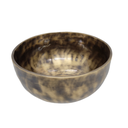
Tibetan singing bowls and crystal singing bowls are both used for meditation and sound healing — but they are fundamentally different instruments made from different materials, producing different sounds, and serving different purposes. The question "which is better?" does not have a single answer. The right bowl depends on what you are trying to achieve, how you intend to use it, and what kind of sound you respond to most deeply. This guide covers everything you need to know to make the right choice.
The fundamental differences between Tibetan metal bowls and crystal singing bowls — material, sound character, tradition, and ideal use cases
What Each Bowl Actually Is
Tibetan Singing Bowls
A Tibetan singing bowl is a standing bell, hand-hammered from a metal alloy — traditionally a blend of up to seven metals including copper, tin, zinc, iron, silver, gold, and lead — by skilled artisans in the Himalayan region, primarily Nepal. The craft has a documented history stretching back over 2,500 years. These bowls were originally created for Buddhist meditation, shamanic ceremony, and offering rituals in monastery settings.
The sound of a Tibetan bowl is produced by the complex interaction of its metal alloy composition, wall thickness, rim shape, and the decades or centuries of crystalline maturation in the metal. When struck or rimmed, it produces multiple simultaneous overtones — a warm, rich, deeply layered sound that many practitioners describe as feeling as though it comes from inside the body rather than outside it.
Crystal Singing Bowls
A crystal singing bowl is made from crushed quartz crystal, fused under extreme heat into a bowl shape. This is a relatively modern instrument — crystal singing bowls were developed in the 1980s initially as laboratory equipment (silicon crucibles), before sound healers discovered their acoustic properties and adopted them for healing practice.
Crystal bowls produce a single, pure, sustained frequency — the tone is extraordinarily clear and penetrating, with very little harmonic complexity compared to metal bowls. Each crystal bowl is tuned to a specific musical note with great precision, and the purity of that note is the bowl's primary acoustic characteristic.
Tibetan bowls produce multiple simultaneous overtones — crystal bowls produce one single, pure, precise frequency. Neither is superior; they serve different purposes.
Side-by-Side Comparison
- Hand-hammered from bronze or 7-metal alloy
- Produces warm, complex, multi-layered overtones
- Sustain of 30–60+ seconds with tonal evolution
- Rooted in 2,500 years of Himalayan tradition
- Extremely durable — nearly impossible to break
- Works well in any environment — indoors or out
- Easier for beginners to play effectively
- Improves in tone with age and use over decades
- Affordable entry point ($45–$90 for quality)
- No special storage requirements
- Each bowl is acoustically unique — no two alike
- Can be played directly on the body safely
- Fused from crushed quartz crystal under high heat
- Produces single, pure, precisely tuned frequency
- Very long sustain but acoustically simpler
- Modern instrument developed in the 1980s
- Fragile — chips and cracks with impact or temperature shock
- Sensitive to temperature extremes and humidity
- Requires more technique to play cleanly
- Tone does not change significantly with age
- Higher price for comparable quality ($120–$300+)
- Must be stored in padded case, handled carefully
- Mass-produced sizes allow consistent tuning
- Should not be placed directly on skin in most cases
Key attribute comparison — Tibetan bowls lead in complexity, durability and ease of use; crystal bowls lead in tuning precision and tonal purity
The Sound: What Each Bowl Actually Feels Like
The most important difference between the two bowls is not visible — it is audible, and it is felt in the body. Understanding how each type of sound works helps you choose the one that will serve your practice most deeply.
🔶 How a Tibetan Bowl Sounds
When you strike a quality handmade Tibetan bowl, you hear not one sound but several simultaneously. There is the main fundamental note, then above and below it, secondary and tertiary frequencies — overtones — that shift and evolve as the sound sustains. The overall effect is warm, enveloping, and complex.
Many practitioners describe the experience of a Tibetan bowl as feeling as though the sound originates inside the body rather than outside it — as if the vibration is resonating with something internal rather than arriving from an external source. This quality makes Tibetan bowls particularly effective for body-based meditation, grounding, and stress release.
🔷 How a Crystal Bowl Sounds
A crystal bowl produces one note — but it produces it with extraordinary purity and clarity. The tone is bright, penetrating, and often described as ethereal or otherworldly. There is very little warmth or complexity, but the precision and purity of the single frequency can cut through mental chatter with a clarity that some practitioners find more effective than the complex tone of a metal bowl.
Many practitioners describe the experience of a crystal bowl as more "mental" or "upper" — felt in the head, the crown, and the higher chakras rather than in the body and the lower chakras. This makes crystal bowls particularly popular for third eye and crown chakra work.
"Neither bowl is better. They speak different languages. The Tibetan bowl speaks to the body; the crystal bowl speaks to the mind. Most serious practitioners eventually want both."
— Sound healing practitioner and bowl collector, 20 years of practiceWhich Bowl Wins in Each Situation?
Use-case comparison — Tibetan bowls are the more versatile choice for most situations; crystal bowls excel specifically for upper chakra and precision frequency work
🧘 For daily personal meditation
Which bowl to reach for every morning
The Tibetan bowl wins clearly here. Its warmth, complexity, and durability make it the ideal daily companion. It is forgiving to play — a slightly imperfect strike still produces a beautiful sound. It does not require special storage or careful handling. And its complex overtones provide a richer, more engaging auditory environment for sustained meditation.
🔶 Tibetan Bowl recommended🔮 For crown and third eye chakra work
Upper energy centers and higher consciousness
Crystal bowls have a genuine edge for upper chakra work. The pure, penetrating high-frequency tone of a crystal bowl resonates particularly well with the upper energy centers — the Third Eye (A note) and Crown Chakra (B note). Many advanced sound healers use crystal bowls specifically for this purpose while using Tibetan bowls for the lower chakras.
🔷 Crystal Bowl recommended🎁 As a gift for a beginner
Someone who has never used a singing bowl before
The Tibetan bowl is the overwhelming choice for gifting. Crystal bowls are fragile — they can crack or chip if set down on a hard surface or exposed to a sudden temperature change. For someone who does not yet know how to handle them, this is a significant risk. A handmade Tibetan bowl is nearly indestructible with normal use and is immediately accessible to anyone.
🔶 Tibetan Bowl recommended🎵 For a professional sound healer
Building a full therapeutic practice
Most professional sound healers use both. The standard approach is to use Tibetan bowls for grounding, body work, and lower chakra activation, and crystal bowls for upper chakra work and the closing stages of a session. If you can only have one to start, the Tibetan bowl set gives you more versatility across the full range of sound healing practice.
Both — Tibetan first, crystal laterCost, Durability, and Practical Differences
Tibetan bowls offer a lower entry price and vastly superior durability — crystal bowls cost more and require careful handling to avoid cracking or chipping
A crystal bowl can be shattered by a sharp impact, cracked by extreme temperature changes, or permanently damaged by contact with other hard objects. Travelling with a crystal bowl requires a padded case and careful packing. A Tibetan bowl can be wrapped in a cloth and placed in a bag without significant risk.
For practitioners who work at home in a consistent, controlled environment, this distinction matters less. For teachers, travellers, or anyone who brings their bowl to yoga studios, retreats, or client sessions, the durability advantage of the Tibetan bowl is significant.
The Verdict: Which Should You Choose?
- Are a beginner buying your first bowl
- Want a bowl for daily personal meditation and stress relief
- Are buying a bowl as a gift for someone
- Travel or teach and need a durable instrument
- Are drawn to the warmth, depth, and tradition of the Himalayan craft
- Want to start with one bowl and build your practice before investing more
- Are interested in grounding, lower chakra work, or sound healing for the body
- Are an experienced practitioner looking to expand your sound healing practice
- Work specifically with upper chakras (Third Eye, Crown) or high-frequency healing
- Are drawn to the pure, ethereal, laser-clear quality of the crystal tone
- Practice in a stable, controlled environment where fragility is manageable
- Already own Tibetan bowls and want to add a complementary instrument
For most people reading this guide — especially beginners, those buying a first bowl, and those seeking a reliable daily practice tool — a handmade Tibetan singing bowl from Nepal is the right choice. It is more accessible, more durable, more versatile, more deeply rooted in tradition, and its complex overtones have been the subject of the most robust scientific research on sound healing benefits.
That said, the most well-equipped sound healing practice eventually includes both. Many experienced practitioners describe Tibetan and crystal bowls as complementary instruments — each bringing something the other cannot — rather than competitors.
Frequently Asked Questions
Yes, and many experienced practitioners do. A common approach is to begin a session with Tibetan bowls — using their warmth and complexity to ground participants and open the lower and middle chakras — and then close with a crystal bowl for the Crown or Third Eye, allowing the pure, clear tone to elevate and integrate the experience. The contrast between the two types of sound can be a powerful compositional element in a sound healing session.
There is no scientific evidence that crystal bowls produce greater healing effects than Tibetan bowls. The most robust research on singing bowl therapy has been conducted primarily with Tibetan (metal) bowls. Crystal bowls are a modern instrument with a shorter history and less research behind them. Both types produce measurable physiological effects through the relaxation response, but the specific claim that crystal bowls are more "healing" than metal bowls is not supported by evidence.
Crystal bowls are made from pure quartz crystal — a material that is both expensive and technically demanding to work with. The manufacturing process requires extreme heat and precision equipment, and a significant percentage of bowls crack or fail during production. Tibetan bowls, by contrast, are made from metal alloys that are less expensive to source, though the skilled hand labor required for quality handmade bowls does represent a genuine cost. At comparable quality levels, both types are fairly priced for what they are.
Crystal bowls should never be cleaned with water, as moisture can enter any micro-cracks and cause damage over time. They are typically cleansed energetically — with sound, sunlight, moonlight, or intention — rather than physically washed. Tibetan bowls can be wiped with a damp cloth for physical cleaning, though the same caution applies to antique bowls with aged patina. For spiritual cleansing, both types respond well to sound cleansing — playing the bowl itself is considered the most effective cleansing method by most practitioners.
We recommend a handmade Tibetan singing bowl from Nepal — specifically a plain or lightly engraved bowl in the 4–6 inch range — as the ideal first bowl for almost everyone. The sound is immediately accessible and deeply satisfying, the playability is easy, the durability is excellent, and the price point allows you to acquire a genuinely high-quality instrument without a prohibitive investment. If after six months of daily practice you feel drawn to explore crystal bowls, that is the perfect time to make that additional investment from a position of genuine knowledge and experience.
Start with the tradition. Start with Nepal.
Every Buddha Chime bowl is hand-hammered by Nepali artisans — warm, complex, durable.
The sound that 2,500 years of practice has refined.
Tibetan singing bowls and crystal singing bowls are both used for meditation and sound healing — but they are fundamentally different instruments made from different materials, producing different sounds, and serving different purposes. The question "which is better?" does not have a single answer. The right bowl depends on what you are trying to achieve, how you intend to use it, and what kind of sound you respond to most deeply. This guide covers everything you need to know to make the right choice.
The fundamental differences between Tibetan metal bowls and crystal singing bowls — material, sound character, tradition, and ideal use cases
What Each Bowl Actually Is
Tibetan Singing Bowls
A Tibetan singing bowl is a standing bell, hand-hammered from a metal alloy — traditionally a blend of up to seven metals including copper, tin, zinc, iron, silver, gold, and lead — by skilled artisans in the Himalayan region, primarily Nepal. The craft has a documented history stretching back over 2,500 years. These bowls were originally created for Buddhist meditation, shamanic ceremony, and offering rituals in monastery settings.
The sound of a Tibetan bowl is produced by the complex interaction of its metal alloy composition, wall thickness, rim shape, and the decades or centuries of crystalline maturation in the metal. When struck or rimmed, it produces multiple simultaneous overtones — a warm, rich, deeply layered sound that many practitioners describe as feeling as though it comes from inside the body rather than outside it.
Crystal Singing Bowls
A crystal singing bowl is made from crushed quartz crystal, fused under extreme heat into a bowl shape. This is a relatively modern instrument — crystal singing bowls were developed in the 1980s initially as laboratory equipment (silicon crucibles), before sound healers discovered their acoustic properties and adopted them for healing practice.
Crystal bowls produce a single, pure, sustained frequency — the tone is extraordinarily clear and penetrating, with very little harmonic complexity compared to metal bowls. Each crystal bowl is tuned to a specific musical note with great precision, and the purity of that note is the bowl's primary acoustic characteristic.
Tibetan bowls produce multiple simultaneous overtones — crystal bowls produce one single, pure, precise frequency. Neither is superior; they serve different purposes.
Side-by-Side Comparison
- Hand-hammered from bronze or 7-metal alloy
- Produces warm, complex, multi-layered overtones
- Sustain of 30–60+ seconds with tonal evolution
- Rooted in 2,500 years of Himalayan tradition
- Extremely durable — nearly impossible to break
- Works well in any environment — indoors or out
- Easier for beginners to play effectively
- Improves in tone with age and use over decades
- Affordable entry point ($45–$90 for quality)
- No special storage requirements
- Each bowl is acoustically unique — no two alike
- Can be played directly on the body safely
- Fused from crushed quartz crystal under high heat
- Produces single, pure, precisely tuned frequency
- Very long sustain but acoustically simpler
- Modern instrument developed in the 1980s
- Fragile — chips and cracks with impact or temperature shock
- Sensitive to temperature extremes and humidity
- Requires more technique to play cleanly
- Tone does not change significantly with age
- Higher price for comparable quality ($120–$300+)
- Must be stored in padded case, handled carefully
- Mass-produced sizes allow consistent tuning
- Should not be placed directly on skin in most cases
Key attribute comparison — Tibetan bowls lead in complexity, durability and ease of use; crystal bowls lead in tuning precision and tonal purity
The Sound: What Each Bowl Actually Feels Like
The most important difference between the two bowls is not visible — it is audible, and it is felt in the body. Understanding how each type of sound works helps you choose the one that will serve your practice most deeply.
🔶 How a Tibetan Bowl Sounds
When you strike a quality handmade Tibetan bowl, you hear not one sound but several simultaneously. There is the main fundamental note, then above and below it, secondary and tertiary frequencies — overtones — that shift and evolve as the sound sustains. The overall effect is warm, enveloping, and complex.
Many practitioners describe the experience of a Tibetan bowl as feeling as though the sound originates inside the body rather than outside it — as if the vibration is resonating with something internal rather than arriving from an external source. This quality makes Tibetan bowls particularly effective for body-based meditation, grounding, and stress release.
🔷 How a Crystal Bowl Sounds
A crystal bowl produces one note — but it produces it with extraordinary purity and clarity. The tone is bright, penetrating, and often described as ethereal or otherworldly. There is very little warmth or complexity, but the precision and purity of the single frequency can cut through mental chatter with a clarity that some practitioners find more effective than the complex tone of a metal bowl.
Many practitioners describe the experience of a crystal bowl as more "mental" or "upper" — felt in the head, the crown, and the higher chakras rather than in the body and the lower chakras. This makes crystal bowls particularly popular for third eye and crown chakra work.
"Neither bowl is better. They speak different languages. The Tibetan bowl speaks to the body; the crystal bowl speaks to the mind. Most serious practitioners eventually want both."
— Sound healing practitioner and bowl collector, 20 years of practiceWhich Bowl Wins in Each Situation?
Use-case comparison — Tibetan bowls are the more versatile choice for most situations; crystal bowls excel specifically for upper chakra and precision frequency work
🧘 For daily personal meditation
Which bowl to reach for every morning
The Tibetan bowl wins clearly here. Its warmth, complexity, and durability make it the ideal daily companion. It is forgiving to play — a slightly imperfect strike still produces a beautiful sound. It does not require special storage or careful handling. And its complex overtones provide a richer, more engaging auditory environment for sustained meditation.
🔶 Tibetan Bowl recommended🔮 For crown and third eye chakra work
Upper energy centers and higher consciousness
Crystal bowls have a genuine edge for upper chakra work. The pure, penetrating high-frequency tone of a crystal bowl resonates particularly well with the upper energy centers — the Third Eye (A note) and Crown Chakra (B note). Many advanced sound healers use crystal bowls specifically for this purpose while using Tibetan bowls for the lower chakras.
🔷 Crystal Bowl recommended🎁 As a gift for a beginner
Someone who has never used a singing bowl before
The Tibetan bowl is the overwhelming choice for gifting. Crystal bowls are fragile — they can crack or chip if set down on a hard surface or exposed to a sudden temperature change. For someone who does not yet know how to handle them, this is a significant risk. A handmade Tibetan bowl is nearly indestructible with normal use and is immediately accessible to anyone.
🔶 Tibetan Bowl recommended🎵 For a professional sound healer
Building a full therapeutic practice
Most professional sound healers use both. The standard approach is to use Tibetan bowls for grounding, body work, and lower chakra activation, and crystal bowls for upper chakra work and the closing stages of a session. If you can only have one to start, the Tibetan bowl set gives you more versatility across the full range of sound healing practice.
Both — Tibetan first, crystal laterCost, Durability, and Practical Differences
Tibetan bowls offer a lower entry price and vastly superior durability — crystal bowls cost more and require careful handling to avoid cracking or chipping
A crystal bowl can be shattered by a sharp impact, cracked by extreme temperature changes, or permanently damaged by contact with other hard objects. Travelling with a crystal bowl requires a padded case and careful packing. A Tibetan bowl can be wrapped in a cloth and placed in a bag without significant risk.
For practitioners who work at home in a consistent, controlled environment, this distinction matters less. For teachers, travellers, or anyone who brings their bowl to yoga studios, retreats, or client sessions, the durability advantage of the Tibetan bowl is significant.
The Verdict: Which Should You Choose?
- Are a beginner buying your first bowl
- Want a bowl for daily personal meditation and stress relief
- Are buying a bowl as a gift for someone
- Travel or teach and need a durable instrument
- Are drawn to the warmth, depth, and tradition of the Himalayan craft
- Want to start with one bowl and build your practice before investing more
- Are interested in grounding, lower chakra work, or sound healing for the body
- Are an experienced practitioner looking to expand your sound healing practice
- Work specifically with upper chakras (Third Eye, Crown) or high-frequency healing
- Are drawn to the pure, ethereal, laser-clear quality of the crystal tone
- Practice in a stable, controlled environment where fragility is manageable
- Already own Tibetan bowls and want to add a complementary instrument
For most people reading this guide — especially beginners, those buying a first bowl, and those seeking a reliable daily practice tool — a handmade Tibetan singing bowl from Nepal is the right choice. It is more accessible, more durable, more versatile, more deeply rooted in tradition, and its complex overtones have been the subject of the most robust scientific research on sound healing benefits.
That said, the most well-equipped sound healing practice eventually includes both. Many experienced practitioners describe Tibetan and crystal bowls as complementary instruments — each bringing something the other cannot — rather than competitors.
Frequently Asked Questions
Yes, and many experienced practitioners do. A common approach is to begin a session with Tibetan bowls — using their warmth and complexity to ground participants and open the lower and middle chakras — and then close with a crystal bowl for the Crown or Third Eye, allowing the pure, clear tone to elevate and integrate the experience. The contrast between the two types of sound can be a powerful compositional element in a sound healing session.
There is no scientific evidence that crystal bowls produce greater healing effects than Tibetan bowls. The most robust research on singing bowl therapy has been conducted primarily with Tibetan (metal) bowls. Crystal bowls are a modern instrument with a shorter history and less research behind them. Both types produce measurable physiological effects through the relaxation response, but the specific claim that crystal bowls are more "healing" than metal bowls is not supported by evidence.
Crystal bowls are made from pure quartz crystal — a material that is both expensive and technically demanding to work with. The manufacturing process requires extreme heat and precision equipment, and a significant percentage of bowls crack or fail during production. Tibetan bowls, by contrast, are made from metal alloys that are less expensive to source, though the skilled hand labor required for quality handmade bowls does represent a genuine cost. At comparable quality levels, both types are fairly priced for what they are.
Crystal bowls should never be cleaned with water, as moisture can enter any micro-cracks and cause damage over time. They are typically cleansed energetically — with sound, sunlight, moonlight, or intention — rather than physically washed. Tibetan bowls can be wiped with a damp cloth for physical cleaning, though the same caution applies to antique bowls with aged patina. For spiritual cleansing, both types respond well to sound cleansing — playing the bowl itself is considered the most effective cleansing method by most practitioners.
We recommend a handmade Tibetan singing bowl from Nepal — specifically a plain or lightly engraved bowl in the 4–6 inch range — as the ideal first bowl for almost everyone. The sound is immediately accessible and deeply satisfying, the playability is easy, the durability is excellent, and the price point allows you to acquire a genuinely high-quality instrument without a prohibitive investment. If after six months of daily practice you feel drawn to explore crystal bowls, that is the perfect time to make that additional investment from a position of genuine knowledge and experience.
Start with the tradition. Start with Nepal.
Every Buddha Chime bowl is hand-hammered by Nepali artisans — warm, complex, durable.
The sound that 2,500 years of practice has refined.
Start writing here...