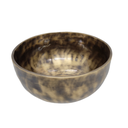
Frequency is one of the most discussed and least understood concepts in the singing bowl world. Online sources promise that one bowl tuned to 432 Hz will "open the heart," another to 528 Hz will "repair DNA," and a third to 174 Hz will "remove pain." Underneath the marketing, however, is a real and measurable phenomenon — bowls do produce specific frequencies, those frequencies do interact with the human nervous system in studied ways, and traditional systems for matching frequency to intention have an internal logic worth understanding. This guide separates the science from the salesmanship.
The Basic Physics: What "Frequency" Actually Means
Frequency is simply the rate at which a sound wave oscillates, measured in Hertz (Hz). A 256 Hz tone vibrates 256 times per second; a 432 Hz tone, 432 times per second. Higher numbers mean higher pitches; lower numbers mean lower pitches. The audible range for humans runs from roughly 20 Hz to 20,000 Hz.
A singing bowl does not produce one frequency. It produces many at once. When struck, the bowl wall vibrates in several distinct flexural modes simultaneously — oscillating as an ellipse, then as a triangle, then as more complex shapes. Each mode corresponds to a different frequency. The lowest is called the fundamental; the higher ones are overtones or partials.
The fundamental of a typical hand-hammered bowl falls between 110 Hz and 660 Hz — roughly two octaves. Overtones extend several octaves above that. The blend is what gives each bowl its distinctive voice. Two bowls with the same fundamental can sound entirely different if their overtone structures differ.
How Frequency Affects Mind and Body
Research on sound and the human nervous system is still developing, but several mechanisms are now reasonably well-documented. Three are particularly relevant to singing bowl work.
Brainwave Entrainment
Sustained low-amplitude tones appear to encourage the brain to shift from high-frequency Beta wakefulness into slower Alpha and Theta states. This is the "entrainment" effect — internal rhythms aligning with a steady external stimulus.
Vagal Tone & HRV
Slow sustained tones paired with paced breathing have been shown to raise heart rate variability and activate the parasympathetic branch of the nervous system — the "rest and digest" mode that supports recovery.
Stress Hormone Drop
Small clinical studies have found measurable reductions in self-reported tension and, in some trials, salivary cortisol following singing bowl meditation sessions. Effects are short-term but consistent.
It is important to note that the "frequency" of brainwaves (1–30 Hz electrical oscillation) and the "frequency" of bowl tones (110–4000 Hz acoustic wave) are not the same thing. The bowl does not directly produce a 4 Hz wave that the brain copies. The relaxation response emerges from sustained, breath-paced exposure to the acoustic tone — which then influences the slower brain rhythms indirectly.
Chakras and Frequency: The Traditional Mapping
In Indian Tantric traditions and their modern adaptations, each of the seven primary chakras is associated with a musical note and a specific frequency. The most common mapping, based on a 256 Hz "scientific" tuning of middle C, places one note at each energetic center from the base of the spine to the crown of the head.
This mapping is traditional, not clinical. There is no controlled trial showing that a 341 Hz tone specifically affects "the heart chakra" or that a 256 Hz tone specifically affects "the root chakra." What the mapping does provide is a coherent practical framework — a way to organize a set of seven bowls so that each has a clear role, intention, and place in a session. Many practitioners find this organizational structure valuable as a meditation aid even when they hold the metaphysical claims lightly.
Solfeggio Frequencies: A Popular Framework
The "Solfeggio frequencies" are a set of nine specific tones — 174, 285, 396, 417, 528, 639, 741, 852, and 963 Hz — heavily promoted in modern sound healing. Each is given a specific function: 528 Hz as the "love frequency," 396 Hz to "release fear," 741 Hz to "awaken intuition," and so on.
The historical claims behind these specific numbers — that they originate from a medieval Gregorian hymn rediscovered by a 1970s researcher — do not hold up under musicological scrutiny. The set was assembled and popularized in the late twentieth century. That said, this does not mean the frequencies have no practical value. A bowl that emphasizes a strong 528 Hz partial is a real, measurable acoustic event, and the experience of listening to it is real. The claim that it "repairs DNA" is not supported by evidence; the claim that "many practitioners find this tone calming" is supported by experience.
Research consistently shows that what matters most for the relaxation response is the quality of attention and breath during exposure — not the precise Hz of the tone. A 528 Hz bowl played carelessly produces little; a 487 Hz bowl played with sustained attention often produces a great deal.
Choosing a Bowl by Frequency
For practical use, frequency selection comes down to a few clear principles. The chart below is the simplest reliable guide.
- 110–220 Hz (low) — felt in the chest as much as heard. Grounding, somatic, evening practice. Common in larger bowls (8 inches and up).
- 220–440 Hz (mid) — the most versatile range. Clear, well-sustained, suited to general meditation and breath work. Common in medium bowls.
- 440–660+ Hz (high) — bright and clarifying. Useful for morning practice, focus, and brief sessions. Common in smaller bowls.
- Sets & chakra work — a full 7-chakra set typically spans roughly 220 Hz to 480 Hz, giving one bowl per energetic center without overlap.
Beyond range, a single rule overrides all marketing claims: play the bowl before you buy it, or buy from a maker that records its instruments clearly. Specifications on paper matter far less than the felt response of the bowl in the room.
What Sound Healing Cannot Do — Important Caveats
It is important to note what these frequencies do and do not do.
- Specific Hz values are not medicine. There is no clinical evidence that 528 Hz repairs DNA, that 432 Hz is "the natural tuning of the universe," or that 174 Hz removes pain. Marketing claims that pair an exact frequency with a specific cure should be treated with skepticism.
- Sound work is studied as a complementary approach — not a replacement for medical treatment, mental health care, or evidence-based interventions for any condition.
- Individual response varies significantly. A frequency that feels calming to one person may feel agitating to another. Personal response matters more than published associations.
- The chakra-frequency mapping is a traditional system. It is useful as an organizational and meditative framework; it is not a diagnostic or clinical tool.
- Cautions. People with cochlear implants, severe tinnitus, or recent ear surgery should consult a clinician before extended exposure to sustained tones.
Key Studies & Data Callouts
In a study of 62 participants, a single Himalayan singing bowl meditation session was associated with significant reductions in self-reported tension, anger, and depressed mood compared to pre-session baseline.
Plain English: A single session produced measurable short-term calming — though this was a one-time measure, not a long-term outcome.
A review of relaxation-response interventions, including sound-based modalities, noted consistent short-term reductions in markers of physiological arousal across multiple trials.
Plain English: Practices that slow the breath and focus attention — including bowl work — show measurable calming effects in controlled settings.
Quality hand-hammered bronze bowls produce sustain times of 30 to 60+ seconds, with measurable overtone content extending several octaves above the fundamental.
Plain English: A well-made handmade bowl really does ring for half a minute or more, and the layered overtone structure is acoustically real — not subjective.
Frequently Asked Questions
Bowls Tuned by Hand, Not by Marketing
Every Buddha Chime bowl is hammered by Nepali artisans, individually tuned, and tested for sustain. Rich overtones, 30–60+ second resonance, and full frequency documentation on every bowl we sell.
Frequency is one of the most discussed and least understood concepts in the singing bowl world. Online sources promise that one bowl tuned to 432 Hz will "open the heart," another to 528 Hz will "repair DNA," and a third to 174 Hz will "remove pain." Underneath the marketing, however, is a real and measurable phenomenon — bowls do produce specific frequencies, those frequencies do interact with the human nervous system in studied ways, and traditional systems for matching frequency to intention have an internal logic worth understanding. This guide separates the science from the salesmanship.
The Basic Physics: What "Frequency" Actually Means
Frequency is simply the rate at which a sound wave oscillates, measured in Hertz (Hz). A 256 Hz tone vibrates 256 times per second; a 432 Hz tone, 432 times per second. Higher numbers mean higher pitches; lower numbers mean lower pitches. The audible range for humans runs from roughly 20 Hz to 20,000 Hz.
A singing bowl does not produce one frequency. It produces many at once. When struck, the bowl wall vibrates in several distinct flexural modes simultaneously — oscillating as an ellipse, then as a triangle, then as more complex shapes. Each mode corresponds to a different frequency. The lowest is called the fundamental; the higher ones are overtones or partials.
The fundamental of a typical hand-hammered bowl falls between 110 Hz and 660 Hz — roughly two octaves. Overtones extend several octaves above that. The blend is what gives each bowl its distinctive voice. Two bowls with the same fundamental can sound entirely different if their overtone structures differ.
How Frequency Affects Mind and Body
Research on sound and the human nervous system is still developing, but several mechanisms are now reasonably well-documented. Three are particularly relevant to singing bowl work.
Brainwave Entrainment
Sustained low-amplitude tones appear to encourage the brain to shift from high-frequency Beta wakefulness into slower Alpha and Theta states. This is the "entrainment" effect — internal rhythms aligning with a steady external stimulus.
Vagal Tone & HRV
Slow sustained tones paired with paced breathing have been shown to raise heart rate variability and activate the parasympathetic branch of the nervous system — the "rest and digest" mode that supports recovery.
Stress Hormone Drop
Small clinical studies have found measurable reductions in self-reported tension and, in some trials, salivary cortisol following singing bowl meditation sessions. Effects are short-term but consistent.
It is important to note that the "frequency" of brainwaves (1–30 Hz electrical oscillation) and the "frequency" of bowl tones (110–4000 Hz acoustic wave) are not the same thing. The bowl does not directly produce a 4 Hz wave that the brain copies. The relaxation response emerges from sustained, breath-paced exposure to the acoustic tone — which then influences the slower brain rhythms indirectly.
Chakras and Frequency: The Traditional Mapping
In Indian Tantric traditions and their modern adaptations, each of the seven primary chakras is associated with a musical note and a specific frequency. The most common mapping, based on a 256 Hz "scientific" tuning of middle C, places one note at each energetic center from the base of the spine to the crown of the head.
This mapping is traditional, not clinical. There is no controlled trial showing that a 341 Hz tone specifically affects "the heart chakra" or that a 256 Hz tone specifically affects "the root chakra." What the mapping does provide is a coherent practical framework — a way to organize a set of seven bowls so that each has a clear role, intention, and place in a session. Many practitioners find this organizational structure valuable as a meditation aid even when they hold the metaphysical claims lightly.
Solfeggio Frequencies: A Popular Framework
The "Solfeggio frequencies" are a set of nine specific tones — 174, 285, 396, 417, 528, 639, 741, 852, and 963 Hz — heavily promoted in modern sound healing. Each is given a specific function: 528 Hz as the "love frequency," 396 Hz to "release fear," 741 Hz to "awaken intuition," and so on.
The historical claims behind these specific numbers — that they originate from a medieval Gregorian hymn rediscovered by a 1970s researcher — do not hold up under musicological scrutiny. The set was assembled and popularized in the late twentieth century. That said, this does not mean the frequencies have no practical value. A bowl that emphasizes a strong 528 Hz partial is a real, measurable acoustic event, and the experience of listening to it is real. The claim that it "repairs DNA" is not supported by evidence; the claim that "many practitioners find this tone calming" is supported by experience.
Research consistently shows that what matters most for the relaxation response is the quality of attention and breath during exposure — not the precise Hz of the tone. A 528 Hz bowl played carelessly produces little; a 487 Hz bowl played with sustained attention often produces a great deal.
Choosing a Bowl by Frequency
For practical use, frequency selection comes down to a few clear principles. The chart below is the simplest reliable guide.
- 110–220 Hz (low) — felt in the chest as much as heard. Grounding, somatic, evening practice. Common in larger bowls (8 inches and up).
- 220–440 Hz (mid) — the most versatile range. Clear, well-sustained, suited to general meditation and breath work. Common in medium bowls.
- 440–660+ Hz (high) — bright and clarifying. Useful for morning practice, focus, and brief sessions. Common in smaller bowls.
- Sets & chakra work — a full 7-chakra set typically spans roughly 220 Hz to 480 Hz, giving one bowl per energetic center without overlap.
Beyond range, a single rule overrides all marketing claims: play the bowl before you buy it, or buy from a maker that records its instruments clearly. Specifications on paper matter far less than the felt response of the bowl in the room.
What Sound Healing Cannot Do — Important Caveats
It is important to note what these frequencies do and do not do.
- Specific Hz values are not medicine. There is no clinical evidence that 528 Hz repairs DNA, that 432 Hz is "the natural tuning of the universe," or that 174 Hz removes pain. Marketing claims that pair an exact frequency with a specific cure should be treated with skepticism.
- Sound work is studied as a complementary approach — not a replacement for medical treatment, mental health care, or evidence-based interventions for any condition.
- Individual response varies significantly. A frequency that feels calming to one person may feel agitating to another. Personal response matters more than published associations.
- The chakra-frequency mapping is a traditional system. It is useful as an organizational and meditative framework; it is not a diagnostic or clinical tool.
- Cautions. People with cochlear implants, severe tinnitus, or recent ear surgery should consult a clinician before extended exposure to sustained tones.
Key Studies & Data Callouts
In a study of 62 participants, a single Himalayan singing bowl meditation session was associated with significant reductions in self-reported tension, anger, and depressed mood compared to pre-session baseline.
Plain English: A single session produced measurable short-term calming — though this was a one-time measure, not a long-term outcome.
A review of relaxation-response interventions, including sound-based modalities, noted consistent short-term reductions in markers of physiological arousal across multiple trials.
Plain English: Practices that slow the breath and focus attention — including bowl work — show measurable calming effects in controlled settings.
Quality hand-hammered bronze bowls produce sustain times of 30 to 60+ seconds, with measurable overtone content extending several octaves above the fundamental.
Plain English: A well-made handmade bowl really does ring for half a minute or more, and the layered overtone structure is acoustically real — not subjective.
Frequently Asked Questions
Bowls Tuned by Hand, Not by Marketing
Every Buddha Chime bowl is hammered by Nepali artisans, individually tuned, and tested for sustain. Rich overtones, 30–60+ second resonance, and full frequency documentation on every bowl we sell.
Start writing here...