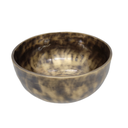
The global market for singing bowls has grown enormously — and so has the number of machine-made, factory-produced bowls sold as "authentic" or "Tibetan" online. The difference between a genuine handmade bowl from Nepal and a mass-produced imitation is significant: in sound, in feel, in longevity, and in the spiritual quality of the object. This guide gives you every tool you need to tell them apart — before you buy.
Why This Distinction Matters
A handmade Tibetan singing bowl is not simply a product. It is the result of a craftsperson's trained hands working metal that has been prepared, heated, and shaped across hours of patient labor. Each hammer strike is deliberate. Each bowl emerges slightly different from every other — in thickness, in tone, in the specific overtones it produces.
A machine-made bowl is stamped or spun from sheet metal in a matter of seconds. It is uniform, thin, and acoustically flat. It may look similar to a handmade bowl in a photograph — but the moment you strike it, or hold it, or place it on your palm, the difference is unmistakable.
This matters because the sound is the entire point. A bowl that produces a rich, layered, sustained tone — the kind that slows your breath and quiets your mind — is a tool that will serve your practice for a lifetime. A bowl that produces a thin, hollow ring lasting five seconds is not.
"A machine can copy the shape of a bowl. It cannot copy the intention of the hands that made it, or the knowledge of what a truly resonant bowl must be."
— Master bowl-maker, Kathmandu Valley, NepalHandmade vs Machine-Made: Complete Comparison
- Visible, irregular hammer marks across the surface
- Slight variation in wall thickness throughout
- Rich, multi-layered tone with complex overtones
- Sound sustains 30–60+ seconds after a single strike
- Warm golden-brown or dark amber color
- Substantial weight for its size
- Slight irregularity in rim shape — each bowl unique
- Improves in tone as the metal ages over years
- Made by a named artisan or artisan family
- Supplier can tell you its origin and making process
- Perfectly smooth, uniform surface with no hammer marks
- Consistent, identical wall thickness throughout
- Flat, single-note tone with little harmonic complexity
- Sound fades within 3–8 seconds of striking
- Often shiny silver or unnaturally bright finish
- Lightweight, feels hollow or thin in the hand
- Perfectly circular, identical to every other bowl of that size
- Tone does not develop or deepen with age
- No traceable maker — anonymous factory production
- Supplier cannot explain its production or source
The 5 Tests You Can Do Right Now
If you already own a bowl, or are evaluating one before purchase, these five tests will give you a clear answer. You do not need any special equipment — just your hands and ears.
Run your fingertips slowly across the outer surface of the bowl. Close your eyes and feel carefully. A handmade bowl will have subtle texture — small depressions and ridges left by the hammer. A machine-made bowl will feel glassy-smooth and completely uniform.
Strike the bowl once with the padded end of the mallet, then count how long the sound continues. Use a stopwatch if available. Quality handmade bowls sustain richly for 30 seconds or more — the sound evolves as it fades, with different overtones becoming audible.
Strike the bowl and listen very carefully — not just for the main note, but for additional frequencies layered underneath and above it. A genuine handmade bowl produces at least two or three distinct layers of sound simultaneously. Try listening with your eyes closed in a quiet room for best results.
Hold the bowl flat in your palm and feel its weight relative to its size. A handmade bowl made from a proper 7-metal or bronze alloy will feel noticeably dense and substantial — heavier than you might expect. Machine-made bowls use thinner metal and feel light, sometimes even hollow.
Look at the rim from directly above. On a handmade bowl, you will notice that the rim is not a perfect circle — it has very subtle undulations from the hand-hammering process. These imperceptible irregularities are precisely what give each handmade bowl its unique tonal fingerprint. A machine bowl's rim is a geometrically perfect circle.
Ask the seller: who made this bowl? Where in Nepal was it made? What is the metal composition? Can you tell me about the artisan? A genuine Nepal artisan supplier can answer these questions specifically. A reseller of machine-made bowls will give vague or evasive answers, or simply repeat "authentic Tibetan" without substance.
Red Flags When Shopping Online
Most machine-made bowls are sold online, where you cannot touch or hear the bowl before purchasing. These are the warning signs that a listing is selling a factory product, not a genuine handmade bowl from Nepal.
A genuine handmade bowl requires hours of skilled labor to produce. Sets selling for $15–$25 with cushion and mallet included are categorically machine-made. Authentic handmade bowls from Nepal start at $40–$60 for a single bowl of reasonable quality, and rise significantly for larger or ceremonial pieces.
Authentic handmade bowls have a warm, matte or semi-matte finish with visible texture. If the product photos show a bowl that looks like polished stainless steel or has a bright, reflective surface, it is machine-made. Genuine bowls have a golden-brown warmth, not a silver shine.
The majority of inauthentic singing bowls are manufactured in China and relabeled as Tibetan or Himalayan. Check the seller's location and shipping origin carefully. Authentic Nepali bowls ship from Nepal — though some legitimate Nepal-based sellers do use international fulfillment warehouses, so always check the seller's stated origin and ask directly if unsure.
Handmade bowls are individually made — no two are exactly alike. If a seller's listing shows 50 bowls that are photographically indistinguishable from one another, they are machine-made. Authentic sellers often photograph each bowl individually and note variations in tone, color, and marking.
Authentic sellers can tell you what the bowl is made of, where it was made, its approximate weight, its musical note, and something about the artisan or tradition behind it. If a listing says only "Tibetan singing bowl, great for meditation" with no further specifics, treat it with skepticism.
A genuine Nepal artisan seller will describe the metal composition, mention the specific region or city of production (Kathmandu, Bhaktapur, Patan), provide the musical note the bowl is tuned to, include photos that show hammer marks and texture, price the bowl honestly relative to its quality, and be able to answer follow-up questions about the specific bowl.
The Price Reality: What Authentic Bowls Actually Cost
One of the most reliable indicators of authenticity is price. Not because expensive always means good — but because genuine handmade bowls have a floor price below which they simply cannot exist given the labor involved.
| Price Range | What You Are Likely Getting | Verdict |
|---|---|---|
| Under $25 | Factory-made, machine-stamped bowl. Possibly mislabeled as "handmade" or "Tibetan." Very short sustain, no overtones. | ❌ Not authentic |
| $25 – $45 | May be a lower-quality handmade bowl from Nepal, or a higher-quality machine bowl. Quality varies significantly. Ask for a sound video. | ⚠ Verify carefully |
| $45 – $120 | This is the range for genuine entry-to-mid level handmade bowls from Nepal — plain or lightly engraved, suitable for daily meditation. Good sustain and overtones. | ✓ Likely authentic |
| $120 – $300 | Mid-to-high quality handmade bowls — larger sizes, chakra-tuned, engraved, hand-painted, or full moon/new moon ceremonial pieces. Rich tone, excellent sustain. | ✓ Authentic, high quality |
| $300+ | Master artisan work — antique bowls, large ceremonial pieces, rare tuned sets, or exceptional individual bowls with documented provenance. For serious practitioners and collectors. | ✓ Master quality |
Why Handmade Matters Beyond Sound
The difference between handmade and machine-made is not only acoustic. It is economic, cultural, and ethical.
- Artisan livelihoods: The families who make authentic singing bowls in Nepal — particularly in the Kathmandu Valley — earn their living directly from this craft. Purchasing a machine-made bowl means this income goes to a factory instead.
- A living tradition: The techniques for making a properly resonant singing bowl are not written in any manual. They are transmitted from master to apprentice, hand to hand, across generations. When demand shifts to machine production, the tradition weakens and eventually disappears.
- Cultural integrity: The singing bowl is not a generic product — it is a specific cultural artifact from the Himalayan Buddhist tradition. Selling machine-made bowls under the "Tibetan" label is a form of cultural misrepresentation that diminishes its meaning and origin.
- Your own practice: There is a subtle but real difference in working with an object that carries human intention versus one that was stamped out by a machine. Many practitioners report that their handmade bowl feels like a genuine companion in practice in a way that a machine bowl never did.
Frequently Asked Questions
A machine-made bowl can produce some sound and can serve as a simple bell — but it cannot replicate the acoustic depth that makes a genuine handmade bowl a powerful meditation tool. The difference becomes obvious the first time you use both side by side. For occasional casual use, a machine bowl may suffice. For a consistent, serious meditation practice, the investment in a genuine handmade bowl pays dividends over years of use.
Ask the seller for a short video of the bowl being struck and rimmed — the sound is impossible to fake on video. Listen for the sustain length and the presence of overtones. Also ask specific questions about the bowl's origin, metal composition, and maker. Reputable sellers will answer enthusiastically. Sellers of machine bowls will often deflect or give vague answers. Purchasing directly from Nepal-based artisan sellers is the most reliable approach.
No — there are genuine Nepal artisan sellers on both platforms. However, the majority of low-to-mid priced singing bowl listings on large marketplaces are machine-made. The key is to apply the same evaluation criteria regardless of platform: ask about origin, request a sound video, check the price against the quality guidelines above, and look for specific rather than generic product descriptions.
Many practitioners who start with a machine bowl describe a profound difference the first time they play a quality handmade bowl — in the depth of the sound, in how the body responds to it, and in the overall meditation experience. Whether to replace it depends on how seriously you take your practice. If you meditate daily and use the bowl as a central tool, upgrading to a genuine handmade bowl is one of the most impactful improvements you can make to your practice.
Yes. Every bowl sold by Buddha Chime is hand-hammered by artisan families in the Kathmandu Valley who we work with directly. We can tell you where each bowl was made, the general family or workshop tradition it comes from, and its metal composition. If you have any questions about a specific bowl before or after purchase, we are always available to discuss it directly.
See — and hear — the difference yourself.
Every Buddha Chime bowl is hand-hammered by Nepali artisans in Kathmandu.
We source directly from the makers — no middlemen, no machine bowls.
The global market for singing bowls has grown enormously — and so has the number of machine-made, factory-produced bowls sold as "authentic" or "Tibetan" online. The difference between a genuine handmade bowl from Nepal and a mass-produced imitation is significant: in sound, in feel, in longevity, and in the spiritual quality of the object. This guide gives you every tool you need to tell them apart — before you buy.
Why This Distinction Matters
A handmade Tibetan singing bowl is not simply a product. It is the result of a craftsperson's trained hands working metal that has been prepared, heated, and shaped across hours of patient labor. Each hammer strike is deliberate. Each bowl emerges slightly different from every other — in thickness, in tone, in the specific overtones it produces.
A machine-made bowl is stamped or spun from sheet metal in a matter of seconds. It is uniform, thin, and acoustically flat. It may look similar to a handmade bowl in a photograph — but the moment you strike it, or hold it, or place it on your palm, the difference is unmistakable.
This matters because the sound is the entire point. A bowl that produces a rich, layered, sustained tone — the kind that slows your breath and quiets your mind — is a tool that will serve your practice for a lifetime. A bowl that produces a thin, hollow ring lasting five seconds is not.
"A machine can copy the shape of a bowl. It cannot copy the intention of the hands that made it, or the knowledge of what a truly resonant bowl must be."
— Master bowl-maker, Kathmandu Valley, NepalHandmade vs Machine-Made: Complete Comparison
- Visible, irregular hammer marks across the surface
- Slight variation in wall thickness throughout
- Rich, multi-layered tone with complex overtones
- Sound sustains 30–60+ seconds after a single strike
- Warm golden-brown or dark amber color
- Substantial weight for its size
- Slight irregularity in rim shape — each bowl unique
- Improves in tone as the metal ages over years
- Made by a named artisan or artisan family
- Supplier can tell you its origin and making process
- Perfectly smooth, uniform surface with no hammer marks
- Consistent, identical wall thickness throughout
- Flat, single-note tone with little harmonic complexity
- Sound fades within 3–8 seconds of striking
- Often shiny silver or unnaturally bright finish
- Lightweight, feels hollow or thin in the hand
- Perfectly circular, identical to every other bowl of that size
- Tone does not develop or deepen with age
- No traceable maker — anonymous factory production
- Supplier cannot explain its production or source
The 5 Tests You Can Do Right Now
If you already own a bowl, or are evaluating one before purchase, these five tests will give you a clear answer. You do not need any special equipment — just your hands and ears.
Run your fingertips slowly across the outer surface of the bowl. Close your eyes and feel carefully. A handmade bowl will have subtle texture — small depressions and ridges left by the hammer. A machine-made bowl will feel glassy-smooth and completely uniform.
Strike the bowl once with the padded end of the mallet, then count how long the sound continues. Use a stopwatch if available. Quality handmade bowls sustain richly for 30 seconds or more — the sound evolves as it fades, with different overtones becoming audible.
Strike the bowl and listen very carefully — not just for the main note, but for additional frequencies layered underneath and above it. A genuine handmade bowl produces at least two or three distinct layers of sound simultaneously. Try listening with your eyes closed in a quiet room for best results.
Hold the bowl flat in your palm and feel its weight relative to its size. A handmade bowl made from a proper 7-metal or bronze alloy will feel noticeably dense and substantial — heavier than you might expect. Machine-made bowls use thinner metal and feel light, sometimes even hollow.
Look at the rim from directly above. On a handmade bowl, you will notice that the rim is not a perfect circle — it has very subtle undulations from the hand-hammering process. These imperceptible irregularities are precisely what give each handmade bowl its unique tonal fingerprint. A machine bowl's rim is a geometrically perfect circle.
Ask the seller: who made this bowl? Where in Nepal was it made? What is the metal composition? Can you tell me about the artisan? A genuine Nepal artisan supplier can answer these questions specifically. A reseller of machine-made bowls will give vague or evasive answers, or simply repeat "authentic Tibetan" without substance.
Red Flags When Shopping Online
Most machine-made bowls are sold online, where you cannot touch or hear the bowl before purchasing. These are the warning signs that a listing is selling a factory product, not a genuine handmade bowl from Nepal.
A genuine handmade bowl requires hours of skilled labor to produce. Sets selling for $15–$25 with cushion and mallet included are categorically machine-made. Authentic handmade bowls from Nepal start at $40–$60 for a single bowl of reasonable quality, and rise significantly for larger or ceremonial pieces.
Authentic handmade bowls have a warm, matte or semi-matte finish with visible texture. If the product photos show a bowl that looks like polished stainless steel or has a bright, reflective surface, it is machine-made. Genuine bowls have a golden-brown warmth, not a silver shine.
The majority of inauthentic singing bowls are manufactured in China and relabeled as Tibetan or Himalayan. Check the seller's location and shipping origin carefully. Authentic Nepali bowls ship from Nepal — though some legitimate Nepal-based sellers do use international fulfillment warehouses, so always check the seller's stated origin and ask directly if unsure.
Handmade bowls are individually made — no two are exactly alike. If a seller's listing shows 50 bowls that are photographically indistinguishable from one another, they are machine-made. Authentic sellers often photograph each bowl individually and note variations in tone, color, and marking.
Authentic sellers can tell you what the bowl is made of, where it was made, its approximate weight, its musical note, and something about the artisan or tradition behind it. If a listing says only "Tibetan singing bowl, great for meditation" with no further specifics, treat it with skepticism.
A genuine Nepal artisan seller will describe the metal composition, mention the specific region or city of production (Kathmandu, Bhaktapur, Patan), provide the musical note the bowl is tuned to, include photos that show hammer marks and texture, price the bowl honestly relative to its quality, and be able to answer follow-up questions about the specific bowl.
The Price Reality: What Authentic Bowls Actually Cost
One of the most reliable indicators of authenticity is price. Not because expensive always means good — but because genuine handmade bowls have a floor price below which they simply cannot exist given the labor involved.
| Price Range | What You Are Likely Getting | Verdict |
|---|---|---|
| Under $25 | Factory-made, machine-stamped bowl. Possibly mislabeled as "handmade" or "Tibetan." Very short sustain, no overtones. | ❌ Not authentic |
| $25 – $45 | May be a lower-quality handmade bowl from Nepal, or a higher-quality machine bowl. Quality varies significantly. Ask for a sound video. | ⚠ Verify carefully |
| $45 – $120 | This is the range for genuine entry-to-mid level handmade bowls from Nepal — plain or lightly engraved, suitable for daily meditation. Good sustain and overtones. | ✓ Likely authentic |
| $120 – $300 | Mid-to-high quality handmade bowls — larger sizes, chakra-tuned, engraved, hand-painted, or full moon/new moon ceremonial pieces. Rich tone, excellent sustain. | ✓ Authentic, high quality |
| $300+ | Master artisan work — antique bowls, large ceremonial pieces, rare tuned sets, or exceptional individual bowls with documented provenance. For serious practitioners and collectors. | ✓ Master quality |
Why Handmade Matters Beyond Sound
The difference between handmade and machine-made is not only acoustic. It is economic, cultural, and ethical.
- Artisan livelihoods: The families who make authentic singing bowls in Nepal — particularly in the Kathmandu Valley — earn their living directly from this craft. Purchasing a machine-made bowl means this income goes to a factory instead.
- A living tradition: The techniques for making a properly resonant singing bowl are not written in any manual. They are transmitted from master to apprentice, hand to hand, across generations. When demand shifts to machine production, the tradition weakens and eventually disappears.
- Cultural integrity: The singing bowl is not a generic product — it is a specific cultural artifact from the Himalayan Buddhist tradition. Selling machine-made bowls under the "Tibetan" label is a form of cultural misrepresentation that diminishes its meaning and origin.
- Your own practice: There is a subtle but real difference in working with an object that carries human intention versus one that was stamped out by a machine. Many practitioners report that their handmade bowl feels like a genuine companion in practice in a way that a machine bowl never did.
Frequently Asked Questions
A machine-made bowl can produce some sound and can serve as a simple bell — but it cannot replicate the acoustic depth that makes a genuine handmade bowl a powerful meditation tool. The difference becomes obvious the first time you use both side by side. For occasional casual use, a machine bowl may suffice. For a consistent, serious meditation practice, the investment in a genuine handmade bowl pays dividends over years of use.
Ask the seller for a short video of the bowl being struck and rimmed — the sound is impossible to fake on video. Listen for the sustain length and the presence of overtones. Also ask specific questions about the bowl's origin, metal composition, and maker. Reputable sellers will answer enthusiastically. Sellers of machine bowls will often deflect or give vague answers. Purchasing directly from Nepal-based artisan sellers is the most reliable approach.
No — there are genuine Nepal artisan sellers on both platforms. However, the majority of low-to-mid priced singing bowl listings on large marketplaces are machine-made. The key is to apply the same evaluation criteria regardless of platform: ask about origin, request a sound video, check the price against the quality guidelines above, and look for specific rather than generic product descriptions.
Many practitioners who start with a machine bowl describe a profound difference the first time they play a quality handmade bowl — in the depth of the sound, in how the body responds to it, and in the overall meditation experience. Whether to replace it depends on how seriously you take your practice. If you meditate daily and use the bowl as a central tool, upgrading to a genuine handmade bowl is one of the most impactful improvements you can make to your practice.
Yes. Every bowl sold by Buddha Chime is hand-hammered by artisan families in the Kathmandu Valley who we work with directly. We can tell you where each bowl was made, the general family or workshop tradition it comes from, and its metal composition. If you have any questions about a specific bowl before or after purchase, we are always available to discuss it directly.
See — and hear — the difference yourself.
Every Buddha Chime bowl is hand-hammered by Nepali artisans in Kathmandu.
We source directly from the makers — no middlemen, no machine bowls.
Start writing here...