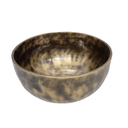
Two of the most distinctive and spiritually significant bowls in the Tibetan tradition are the Full Moon singing bowl and the New Moon singing bowl. Both are handmade in Nepal. Both produce exceptional sound. But they carry different energy, different intention, and different meaning — and understanding the difference will help you choose the one that truly resonates with your practice.
What Makes a Bowl a "Full Moon" or "New Moon" Bowl?
The difference is not in the size, shape, or metal. It is in when and how the bowl is made.
In Nepal, certain artisan families follow an ancient tradition of timing their most sacred bowl-making to specific phases of the lunar calendar. The belief — rooted in both Himalayan Buddhism and Vedic tradition — is that the moon's energy directly influences the quality, intention, and spiritual potency of objects crafted under its light.
A Full Moon singing bowl is crafted and consecrated on the night of Purnima — the full moon — when the moon is at its brightest and most powerful. The artisans work by moonlight, often in open courtyards, chanting mantras as they hammer. The bowl is believed to absorb the full moon's energy: expansive, radiant, and illuminating.
A New Moon singing bowl is crafted on the night of Amavasya — the new moon — when the sky is completely dark. This is considered a deeply inward, receptive time in Himalayan tradition. The bowl absorbs the energy of stillness, potential, and new beginnings — the quiet before creation.
"The moon does not change the metal. It changes the intention that enters the metal while it is being shaped. That intention never leaves the bowl."
— Traditional Nepali bowl-making wisdom, Kathmandu ValleyAt Buddha Chime, our Full Moon and New Moon bowls are made by artisan families in the Kathmandu Valley who have observed this lunar tradition for generations. Each bowl is crafted in a single night, during the designated moon phase, with mantras recited throughout the process.
Full Moon vs New Moon Singing Bowl: Side by Side
Crafted under the bright full moon when lunar energy is at its peak. Carries an outward, radiating quality — expansive, celebratory, and illuminating.
- Energy of completion and fullness
- Amplifies gratitude and abundance
- Ideal for group healing and ceremonies
- Supports releasing what no longer serves
- Best for sound healing practitioners
- Tone: warm, full, deeply resonant
Crafted under the dark new moon — a time of stillness and inner reflection. Carries an inward, receptive quality — quiet, potent, and full of possibility.
- Energy of beginnings and intention-setting
- Supports deep meditation and inner work
- Ideal for personal practice and journaling
- Amplifies new intentions and fresh starts
- Best for individual daily practice
- Tone: clear, focused, penetrating
Detailed Comparison
| Feature | 🌕 Full Moon Bowl | 🌑 New Moon Bowl |
|---|---|---|
| Made during | Purnima (full moon night) | Amavasya (new moon night) |
| Energy quality | Expansive, outward, radiant | Receptive, inward, still |
| Best used for | Release, celebration, group healing | New beginnings, deep meditation, intention |
| Ideal setting | Group ceremonies, sound baths | Solo morning or evening practice |
| Sound character | Warm, full, long sustain | Clear, focused, penetrating |
| Spiritual tradition | Purnima rituals, Himalayan Buddhism | Amavasya practices, ancestor reverence |
| Chakra affinity | Heart, Crown, Third Eye | Root, Sacral, Third Eye |
| Best as a gift for | Sound healers, yoga teachers, groups | Meditators, journal writers, beginners |
| Metal & construction | Same 7-metal alloy, hand-hammered | Same 7-metal alloy, hand-hammered |
| Rarity | Limited — made once a month | Limited — made once a month |
The Lunar Calendar: Why Moon Phases Matter in Nepali Tradition
To understand why Nepali artisans observe the lunar calendar so carefully, it helps to understand how the moon is viewed in Himalayan Buddhist and Vedic traditions. The moon is not merely a celestial object — it is a living force that governs water, tides, emotions, fertility, and spiritual receptivity.
In Nepal, Purnima (full moon) is one of the most sacred days in the calendar. Temples are full, offerings are made, and many families fast and pray. It is considered an especially auspicious time for creating sacred objects because the heightened spiritual activity is believed to infuse everything made during that period with greater potency.
Amavasya (new moon) is considered powerful for a different reason — it is the time when the veil between the living and the ancestral world is believed to be thinnest. It is a time of deep reverence, inner work, and planting seeds of intention. Bowls made during Amavasya are said to carry this quality of profound depth and receptivity.
How to Use a Full Moon Singing Bowl
The Full Moon bowl is at its most powerful when used in alignment with the full moon — though it carries this energy year-round. Here are practices that work especially well with this bowl:
Full Moon release ceremony
On the night of the full moon, sit outside or by a window where you can see the moonlight. Write down on paper what you are ready to release — a habit, a fear, an old story. Strike the bowl three times, read your list aloud, then burn or tear the paper. The bowl's sound is believed to carry your intention outward and upward.
Sound bath for groups
The Full Moon bowl's warm, expansive tone fills a room beautifully. Have participants lie down and close their eyes. Play the bowl slowly around the room, allowing the sound to move through the space. The outward energy of a Full Moon bowl is particularly suited to this kind of shared, collective healing.
Gratitude practice
Each morning, strike the Full Moon bowl once and spend the duration of its ring reflecting on three things you are genuinely grateful for. The bowl's fullness mirrors the energy of abundance and appreciation. This simple practice, done consistently, is reported by many practitioners to shift their overall sense of wellbeing significantly.
Charging crystals and sacred objects
Place your crystals, malas, or other sacred objects inside or around the Full Moon bowl. Play the bowl for 5–10 minutes. The vibration is believed to cleanse and recharge the energy of objects placed within its field — a practice used by many sound healing practitioners alongside their Full Moon bowl.
How to Use a New Moon Singing Bowl
The New Moon bowl is a tool of depth and intention. It calls you inward, into the quiet space where real transformation begins. These practices align naturally with its energy:
New moon intention-setting ritual
On the night of the new moon, sit in a darkened room with just a candle. Strike your New Moon bowl and, during the ring, close your eyes and visualize clearly what you want to call into your life this lunar cycle. Write your intention in a journal after the sound fades. Repeat this every new moon and observe what unfolds over time.
Deep morning meditation
Strike the New Moon bowl before your morning meditation and allow its tone to guide you into stillness. The focused, penetrating quality of its sound is particularly effective at cutting through mental chatter and dropping you into a meditative state quickly — even on busy mornings when quieting the mind feels difficult.
Journaling anchor
Play the New Moon bowl for 2–3 minutes before journaling. The inward quality of its energy supports honest self-reflection and deep inner listening — the kind of clarity that good journaling requires. Many practitioners find they write more honestly and insightfully when they use this bowl before picking up the pen.
Sleep preparation
Strike the New Moon bowl gently 15–20 minutes before sleep. Lie in bed and allow the sound to deepen your breathing and slow your mind. The new moon's energy of stillness and darkness mirrors the state we need for deep, restorative sleep. This is one of the most commonly reported uses of the New Moon bowl among Buddha Chime customers.
Which One Is Right for You?
Both bowls are exceptional. The right choice depends entirely on how you intend to use it and what your practice currently needs.
🌕 Choose Full Moon if you...
- Lead group sound healing sessions
- Teach yoga and want to open or close class
- Want to work with release and letting go
- Practice gratitude rituals
- Want a bowl that fills a room with sound
- Are buying a gift for a sound healer
- Feel drawn to warmth and radiance
🌑 Choose New Moon if you...
- Have a personal daily meditation practice
- Journal regularly and want to go deeper
- Work with setting intentions and new cycles
- Struggle with sleep or mental quietness
- Are a beginner building a daily ritual
- Want a bowl for solo, private practice
- Feel drawn to stillness and depth
- Own both: Many serious practitioners use the New Moon bowl for daily personal practice and the Full Moon bowl for group work or ceremonial use. Together, they cover the full spectrum of lunar and healing energy.
- Follow your intuition: Read the descriptions again and notice which one you feel pulled toward. That pull is information. The bowl you are drawn to is almost always the one your practice currently needs.
- Consider your current season of life: If you are in a period of starting fresh, new beginnings, or inner work — choose New Moon. If you are in a period of completion, celebration, or sharing with others — choose Full Moon.
How We Make Our Lunar Bowls at Buddha Chime
Our Full Moon and New Moon bowls are not simply labeled after the moon — they are genuinely made during these lunar phases by artisan families in the Kathmandu Valley who have maintained this tradition for generations.
The process begins in the days before the designated moon phase, when the metal is prepared and the workspace is cleansed with incense and prayer. On the night itself, the artisans work outdoors or in open-air workshops where the moonlight — or its absence — can reach the bowl as it is being shaped.
Mantras are chanted throughout the hammering process. Specific Buddhist prayers aligned with the moon phase are recited — Purnima prayers of gratitude and illumination for Full Moon bowls, and Amavasya prayers of depth and ancestral reverence for New Moon bowls. The bowl is then left in the lunar energy overnight before being brought inside.
Because both moon phases occur only once per month, our lunar bowls are made in limited quantities. When they are sold out, they do not reappear until the following month's moon phase. This is one reason why they are among our most treasured and sought-after pieces.
Frequently Asked Questions
Both are made from the same high-quality 7-metal alloy using the same hand-hammering technique, so the fundamental sound quality is comparable. Many practitioners and experienced listeners report that Full Moon bowls tend to have a slightly warmer, more expansive resonance, while New Moon bowls have a slightly more focused and penetrating tone. However, individual variation between specific bowls is also significant — the best way to choose is by the intention you are setting for its use.
No. A Full Moon bowl carries its energy year-round and can be used in any daily practice. Many practitioners do find that playing their lunar bowls on the corresponding moon night amplifies the experience significantly — but they are equally effective tools for daily meditation, yoga, and healing at any time of the month.
This is a fair question, and it is one reason sourcing matters. At Buddha Chime, we source directly from the artisan families who make these bowls and have maintained this tradition for generations. We do not add "Full Moon" or "New Moon" as a marketing label to ordinary bowls. If you have any questions about a specific bowl's origin, you are welcome to contact us directly and we will share what we know about its making.
Yes, slightly. The ceremonial nature of their making — the limited production window, the mantra recitation, the overnight lunar consecration — means they require more time and intention from the artisan. They are also produced in smaller quantities. At Buddha Chime, we keep the price difference modest because we believe these bowls should be accessible to sincere practitioners, not priced as luxury items.
These make among the most meaningful and distinctive gifts you can give to someone with a meditation, yoga, or sound healing practice. The lunar story behind the bowl gives the recipient something to connect with beyond the physical object. A Full Moon bowl is especially well-received as a gift for someone going through a major transition — a graduation, a new chapter, a healing journey. A New Moon bowl is perfect for someone beginning a new practice or entering a period of deep personal growth.
Find Your Lunar Singing Bowl
Handcrafted during their respective moon phases by Nepali artisans in Kathmandu.
Limited quantities available each month — made once, under the moon.
Two of the most distinctive and spiritually significant bowls in the Tibetan tradition are the Full Moon singing bowl and the New Moon singing bowl. Both are handmade in Nepal. Both produce exceptional sound. But they carry different energy, different intention, and different meaning — and understanding the difference will help you choose the one that truly resonates with your practice.
What Makes a Bowl a "Full Moon" or "New Moon" Bowl?
The difference is not in the size, shape, or metal. It is in when and how the bowl is made.
In Nepal, certain artisan families follow an ancient tradition of timing their most sacred bowl-making to specific phases of the lunar calendar. The belief — rooted in both Himalayan Buddhism and Vedic tradition — is that the moon's energy directly influences the quality, intention, and spiritual potency of objects crafted under its light.
A Full Moon singing bowl is crafted and consecrated on the night of Purnima — the full moon — when the moon is at its brightest and most powerful. The artisans work by moonlight, often in open courtyards, chanting mantras as they hammer. The bowl is believed to absorb the full moon's energy: expansive, radiant, and illuminating.
A New Moon singing bowl is crafted on the night of Amavasya — the new moon — when the sky is completely dark. This is considered a deeply inward, receptive time in Himalayan tradition. The bowl absorbs the energy of stillness, potential, and new beginnings — the quiet before creation.
"The moon does not change the metal. It changes the intention that enters the metal while it is being shaped. That intention never leaves the bowl."
— Traditional Nepali bowl-making wisdom, Kathmandu ValleyAt Buddha Chime, our Full Moon and New Moon bowls are made by artisan families in the Kathmandu Valley who have observed this lunar tradition for generations. Each bowl is crafted in a single night, during the designated moon phase, with mantras recited throughout the process.
Full Moon vs New Moon Singing Bowl: Side by Side
Crafted under the bright full moon when lunar energy is at its peak. Carries an outward, radiating quality — expansive, celebratory, and illuminating.
- Energy of completion and fullness
- Amplifies gratitude and abundance
- Ideal for group healing and ceremonies
- Supports releasing what no longer serves
- Best for sound healing practitioners
- Tone: warm, full, deeply resonant
Crafted under the dark new moon — a time of stillness and inner reflection. Carries an inward, receptive quality — quiet, potent, and full of possibility.
- Energy of beginnings and intention-setting
- Supports deep meditation and inner work
- Ideal for personal practice and journaling
- Amplifies new intentions and fresh starts
- Best for individual daily practice
- Tone: clear, focused, penetrating
Detailed Comparison
| Feature | 🌕 Full Moon Bowl | 🌑 New Moon Bowl |
|---|---|---|
| Made during | Purnima (full moon night) | Amavasya (new moon night) |
| Energy quality | Expansive, outward, radiant | Receptive, inward, still |
| Best used for | Release, celebration, group healing | New beginnings, deep meditation, intention |
| Ideal setting | Group ceremonies, sound baths | Solo morning or evening practice |
| Sound character | Warm, full, long sustain | Clear, focused, penetrating |
| Spiritual tradition | Purnima rituals, Himalayan Buddhism | Amavasya practices, ancestor reverence |
| Chakra affinity | Heart, Crown, Third Eye | Root, Sacral, Third Eye |
| Best as a gift for | Sound healers, yoga teachers, groups | Meditators, journal writers, beginners |
| Metal & construction | Same 7-metal alloy, hand-hammered | Same 7-metal alloy, hand-hammered |
| Rarity | Limited — made once a month | Limited — made once a month |
The Lunar Calendar: Why Moon Phases Matter in Nepali Tradition
To understand why Nepali artisans observe the lunar calendar so carefully, it helps to understand how the moon is viewed in Himalayan Buddhist and Vedic traditions. The moon is not merely a celestial object — it is a living force that governs water, tides, emotions, fertility, and spiritual receptivity.
In Nepal, Purnima (full moon) is one of the most sacred days in the calendar. Temples are full, offerings are made, and many families fast and pray. It is considered an especially auspicious time for creating sacred objects because the heightened spiritual activity is believed to infuse everything made during that period with greater potency.
Amavasya (new moon) is considered powerful for a different reason — it is the time when the veil between the living and the ancestral world is believed to be thinnest. It is a time of deep reverence, inner work, and planting seeds of intention. Bowls made during Amavasya are said to carry this quality of profound depth and receptivity.
How to Use a Full Moon Singing Bowl
The Full Moon bowl is at its most powerful when used in alignment with the full moon — though it carries this energy year-round. Here are practices that work especially well with this bowl:
Full Moon release ceremony
On the night of the full moon, sit outside or by a window where you can see the moonlight. Write down on paper what you are ready to release — a habit, a fear, an old story. Strike the bowl three times, read your list aloud, then burn or tear the paper. The bowl's sound is believed to carry your intention outward and upward.
Sound bath for groups
The Full Moon bowl's warm, expansive tone fills a room beautifully. Have participants lie down and close their eyes. Play the bowl slowly around the room, allowing the sound to move through the space. The outward energy of a Full Moon bowl is particularly suited to this kind of shared, collective healing.
Gratitude practice
Each morning, strike the Full Moon bowl once and spend the duration of its ring reflecting on three things you are genuinely grateful for. The bowl's fullness mirrors the energy of abundance and appreciation. This simple practice, done consistently, is reported by many practitioners to shift their overall sense of wellbeing significantly.
Charging crystals and sacred objects
Place your crystals, malas, or other sacred objects inside or around the Full Moon bowl. Play the bowl for 5–10 minutes. The vibration is believed to cleanse and recharge the energy of objects placed within its field — a practice used by many sound healing practitioners alongside their Full Moon bowl.
How to Use a New Moon Singing Bowl
The New Moon bowl is a tool of depth and intention. It calls you inward, into the quiet space where real transformation begins. These practices align naturally with its energy:
New moon intention-setting ritual
On the night of the new moon, sit in a darkened room with just a candle. Strike your New Moon bowl and, during the ring, close your eyes and visualize clearly what you want to call into your life this lunar cycle. Write your intention in a journal after the sound fades. Repeat this every new moon and observe what unfolds over time.
Deep morning meditation
Strike the New Moon bowl before your morning meditation and allow its tone to guide you into stillness. The focused, penetrating quality of its sound is particularly effective at cutting through mental chatter and dropping you into a meditative state quickly — even on busy mornings when quieting the mind feels difficult.
Journaling anchor
Play the New Moon bowl for 2–3 minutes before journaling. The inward quality of its energy supports honest self-reflection and deep inner listening — the kind of clarity that good journaling requires. Many practitioners find they write more honestly and insightfully when they use this bowl before picking up the pen.
Sleep preparation
Strike the New Moon bowl gently 15–20 minutes before sleep. Lie in bed and allow the sound to deepen your breathing and slow your mind. The new moon's energy of stillness and darkness mirrors the state we need for deep, restorative sleep. This is one of the most commonly reported uses of the New Moon bowl among Buddha Chime customers.
Which One Is Right for You?
Both bowls are exceptional. The right choice depends entirely on how you intend to use it and what your practice currently needs.
🌕 Choose Full Moon if you...
- Lead group sound healing sessions
- Teach yoga and want to open or close class
- Want to work with release and letting go
- Practice gratitude rituals
- Want a bowl that fills a room with sound
- Are buying a gift for a sound healer
- Feel drawn to warmth and radiance
🌑 Choose New Moon if you...
- Have a personal daily meditation practice
- Journal regularly and want to go deeper
- Work with setting intentions and new cycles
- Struggle with sleep or mental quietness
- Are a beginner building a daily ritual
- Want a bowl for solo, private practice
- Feel drawn to stillness and depth
- Own both: Many serious practitioners use the New Moon bowl for daily personal practice and the Full Moon bowl for group work or ceremonial use. Together, they cover the full spectrum of lunar and healing energy.
- Follow your intuition: Read the descriptions again and notice which one you feel pulled toward. That pull is information. The bowl you are drawn to is almost always the one your practice currently needs.
- Consider your current season of life: If you are in a period of starting fresh, new beginnings, or inner work — choose New Moon. If you are in a period of completion, celebration, or sharing with others — choose Full Moon.
How We Make Our Lunar Bowls at Buddha Chime
Our Full Moon and New Moon bowls are not simply labeled after the moon — they are genuinely made during these lunar phases by artisan families in the Kathmandu Valley who have maintained this tradition for generations.
The process begins in the days before the designated moon phase, when the metal is prepared and the workspace is cleansed with incense and prayer. On the night itself, the artisans work outdoors or in open-air workshops where the moonlight — or its absence — can reach the bowl as it is being shaped.
Mantras are chanted throughout the hammering process. Specific Buddhist prayers aligned with the moon phase are recited — Purnima prayers of gratitude and illumination for Full Moon bowls, and Amavasya prayers of depth and ancestral reverence for New Moon bowls. The bowl is then left in the lunar energy overnight before being brought inside.
Because both moon phases occur only once per month, our lunar bowls are made in limited quantities. When they are sold out, they do not reappear until the following month's moon phase. This is one reason why they are among our most treasured and sought-after pieces.
Frequently Asked Questions
Both are made from the same high-quality 7-metal alloy using the same hand-hammering technique, so the fundamental sound quality is comparable. Many practitioners and experienced listeners report that Full Moon bowls tend to have a slightly warmer, more expansive resonance, while New Moon bowls have a slightly more focused and penetrating tone. However, individual variation between specific bowls is also significant — the best way to choose is by the intention you are setting for its use.
No. A Full Moon bowl carries its energy year-round and can be used in any daily practice. Many practitioners do find that playing their lunar bowls on the corresponding moon night amplifies the experience significantly — but they are equally effective tools for daily meditation, yoga, and healing at any time of the month.
This is a fair question, and it is one reason sourcing matters. At Buddha Chime, we source directly from the artisan families who make these bowls and have maintained this tradition for generations. We do not add "Full Moon" or "New Moon" as a marketing label to ordinary bowls. If you have any questions about a specific bowl's origin, you are welcome to contact us directly and we will share what we know about its making.
Yes, slightly. The ceremonial nature of their making — the limited production window, the mantra recitation, the overnight lunar consecration — means they require more time and intention from the artisan. They are also produced in smaller quantities. At Buddha Chime, we keep the price difference modest because we believe these bowls should be accessible to sincere practitioners, not priced as luxury items.
These make among the most meaningful and distinctive gifts you can give to someone with a meditation, yoga, or sound healing practice. The lunar story behind the bowl gives the recipient something to connect with beyond the physical object. A Full Moon bowl is especially well-received as a gift for someone going through a major transition — a graduation, a new chapter, a healing journey. A New Moon bowl is perfect for someone beginning a new practice or entering a period of deep personal growth.
Find Your Lunar Singing Bowl
Handcrafted during their respective moon phases by Nepali artisans in Kathmandu.
Limited quantities available each month — made once, under the moon.
Start writing here...